Prominent cases resolved by the Wisconsin Innocence Project are listed below.
For information on the cases featured in Making of A Murder II, please contact the Northwestern Center on Wrongful Convictions.
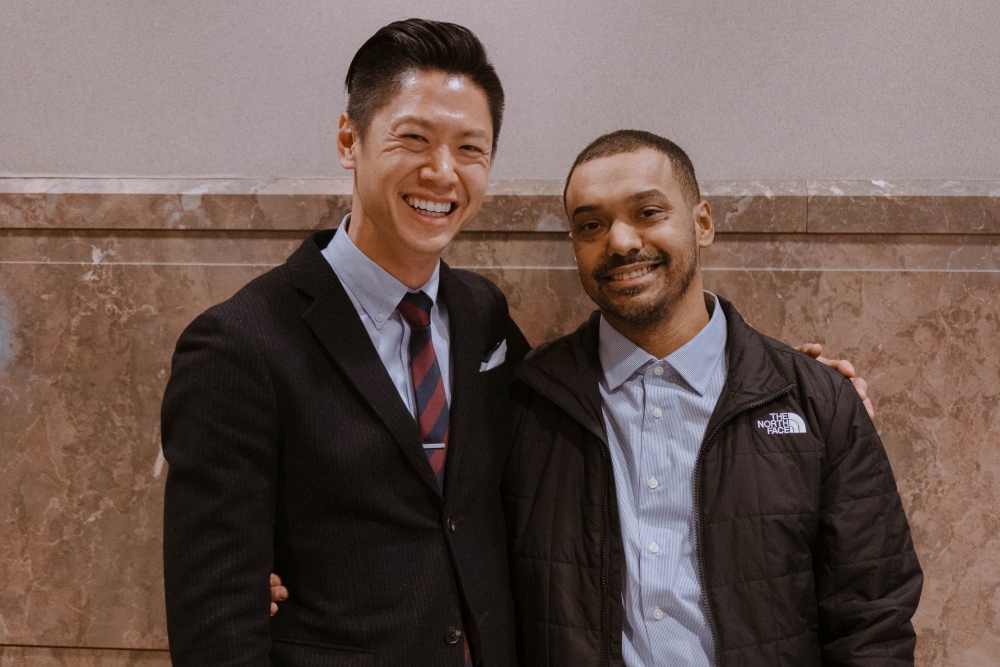
Manuel Cucuta
The Wisconsin Innocence Project (WIP) is proud to announce that their client, Manuel Cucuta, was released from prison on November 26, 2024 after a Milwaukee County judge vacated his life sentence Monday. Just a teenager when he was convicted of a double murder, Cucuta spent 27 years in prison for a crime advocates believe he did not commit.
WIP, after investigating the 44-year-old’s case, raised significant doubts about his guilt and collaborated with District Attorney John Chisholm to petition the court.
Full Details
Cucuta pleaded no contest to second-degree reckless homicide in exchange for his freedom but maintains his innocence and will continue to seek exoneration with help from WIP. After a five-day trial in 1999, 18-year-old Cucuta was sentenced for the 1995 murders of Jose Antonio Andino and Luis A. Enriquez. The only evidence linking him to the crime was witness testimony from members of the Latin Kings gang who had been incentivized to testify against him. No physical or forensic evidence tied Cucuta to the crimes. Cucuta's trial defense counsel failed to adequately challenge the state’s narrative or present mitigating evidence that could prove his innocence. There was no mention of the pressure he faced from family members urging him to join the Latin Kings.
While imprisoned, Cucuta was dedicated to his education, earning his GED and countless certifications. He also found a passion for poetry and Shakespeare. His hard work and growth have garnered the respect and support of Robert Toro and Maria Sanchez, siblings of Andino, one of the victims. They have advocated for his freedom and vow to support him upon release.
"I am grateful to hear that Manuel's life sentence was vacated. It’s about time,” Toro said. “Although I lost a brother and closed that chapter of my life, our family is beginning a new chapter by welcoming Manuel as our brother. He and his family have our complete support, and we look forward to his fresh start."
After his release, Cucuta looks forward to full-time work and returning to a supportive family home. He remains hopeful for a brighter future as he embarks on this new chapter. A GoFundMe fundraiser has been set up to help him rebuild his life. Manuel's release came just two months after the release of another WIP client, David Bintz, who was released from prison after 25 years of wrongful incarceration.
Read the full story on Manuel Cucuta's release.
David Bintz
 David Bintz, and his brother, Robert Bintz, represented by the Great North Innocence Project, were released from prison after 25 years of wrongful incarceration.
Their release came after genetic genealogy DNA results showed the perpetrator in the 1987 slaying of Sandra Lison near Green Bay was someone else – William Joseph Hendricks , a man with prior convictions for similar crimes.
After a hearing Wednesday, Sept. 25, 2024, Brown County Circuit Court Judge Donald R. Zuidmulder signed an order calling for the brothers’ immediate release.
Full Details
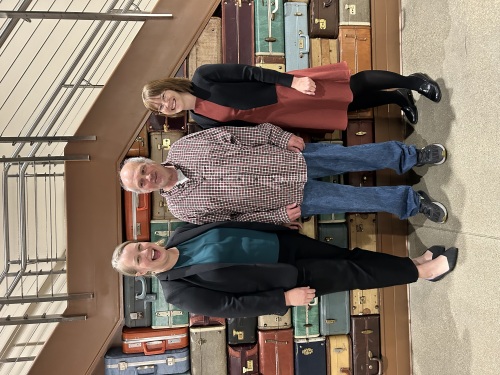
and Zoe Engberg (right)
The body of Lison, a single mother of two, was found in a state forest after she went missing from work. She had been beaten and strangled. Based on police investigation and crime scene conditions, strong evidence showed she was sexually assaulted.
David and Robert Bintz were convicted and sentenced to life in prison nearly 10 years later, despite DNA evidence excluding the brothers as potential sources of the semen recovered from the crime scene; the Brown County District Attorney’s Office had prosecuted them under a different theory of robbery and murder.
In the 2000s, DNA testing by the Wisconsin Innocence Project established that blood found on the victim’s dress came from the same man who had deposited the semen, consistent with law enforcement’s initial conclusion of sexual assault. This new discovery was deemed insufficient to warrant a new trial, a decision that was upheld despite WIP’s appeals to the Court of Appeals and the Wisconsin Supreme Court.
In 2023, work by the Great North Innocence Project, Bode Cellmark Laboratories and the Investigative Genetic Genealogy Center at New Jersey’s Ramapo College narrowed the identity of the man who deposited physical evidence. Further testing identified William Joseph Hendricks, and additional Green Bay Police Department investigative work connected Hendricks to the crime scene. Hendricks is now deceased.
In light of the new evidence, the Brown County Attorney’s Office joined the defense team’s motion to vacate the Bintz brothers’ convictions.
David walked out of prison Wednesday after more than 25 years, finally a free man. He is eager to rebuild his life and reconnect with his family.
The Wisconsin Innocence Project would like to thank the Great North Innocence Project, the Investigative Genetic Genealogy Center at Ramapo College, Bode Cellmark Laboratories, the Wisconsin State Crime Lab, the Brown County District Attorney’s Office and the Green Bay Police Department for their collaboration and dedication.
Read the full story on David Bintz's release.
Additional Cases
Daryl Dwayne Holloway
Daryl Holloway spent almost 24 years in prison for 2 charges of sexual assault and 2 charges of burglary. He was convicted after a faulty police lineup resulted in false eyewitness testimony. Decades later, after numerous requests by Attorney Ray Dall'Osto, Assistant District Attorney Norm Gahn reviewed the case evidence and found test discrepancies and a startling lack of evidence. Mr. Dall'Osto contacted WIP, which took over representation. In collaboration with the District Attorney's Office, the Wisconsin Innocence Project had new DNA testing done. The DNA testing from a sample of the crotch of the victim's underwear revealed the genetic profile of an unknown male. The DNA belonged to neither Daryl Holloway nor the victim's husband.

The Milwaukee District Attorney's office and the Wisconsin Innocence Project drafted a stipulation agreeing that Holloway's conviction should be vacated and that there was not enough evidence to retry the case. Judge Wagner, the same judge that presided over Holloway's conviction in 1992, signed the order reversing conviction. Holloway walked free in October 2016.
This exoneration was supported by Award No. 2013-DY-BX-K404 of the National Institute of Justice, Office of Justice Programs, U.S. Department of Justice. The opinions, findings, and conclusions or recommendations expressed in this publication are those of the author(s) and do not necessarily reflect those of the Department of Justice.
Mario Victoria Vasquez

Mario Vasquez walked free in January 2015 from a Wisconsin jail after serving nearly 17 years for child sexual assault. Mr. Victoria Vasquez's conviction was vacated after the prosecutor stipulated to a new trial and the court vacated the conviction. The conviction was set aside because of powerful new evidence of innocence, including new evidence that another man was likely the perpetrator of the sexual assault on the pre-school-aged victim. In early February 2015, the State dismissed the charge and stated that it would not retry the case. Mr. Victoria Vasquez's conviction was overturned without the benefit of DNA.
Daniel Bolstad
Daniel Bolstad was convicted of second-degree attempted sexual assault in 2007 in a trial that lasted one day. Without forensic or physical evidence, the prosecution's case relied upon the testimony of the victim, her friend, and sister. He was sentenced to 20 years in prison. After the Wisconsin Court of Appeals upheld the ruling in 2012, Mr. Bolstad enlisted the help of the Wisconsin Innocence Project which found that mistaken witness identification and false testimony contributed to the Mr. Bolstad's sentencing. With that new evidence, the Court of Appeals ordered a new trial in the interest of justice. Bolstad was released on bond in 2014, and in 2015, the prosecution dismissed the sexual assault charge.
Seneca Malone
Seneca Malone was convicted of first-degree intentional homicide in 2008. The conviction was based almost entirely on the statement of one person who said he witnessed the shooting. In 2010, the Wisconsin Innocence Project began investigating Mr. Malone's case. The law students and supervising attorney discovered that trial counsel was ineffective in his representation of Mr. Malone. Trial counsel failed to investigate the veracity of the witness' statement and failed to call any witnesses in Mr. Malone's defense. During an 8-day evidentiary hearing, the Wisconsin Innocence Project called over 10 witnesses. The testimony presented included an alibi witness and evidence that the single witness who identified Mr. Malone was the actual perpetrator. On November 16th, 2012, Judge Borowski granted Mr. Malone a new trial. Shortly before retrial, the State offered Mr. Malone a plea deal that would guarantee he would not return to prison. After much consideration, Mr. Malone chose to take this offer rather than face the uncertainties of a jury trial. This difficult decision is one that many wrongfully convicted individuals face. Mr. Malone is happy to be able to spend time with his family and not face further time in prison.
Joseph Frey

Joseph Frey was convicted in 1993 of a sexual assault of a young college woman in her Oshkosh dorm room. Mr. Frey became a suspect after the Green Bay Police Department informed the Oshkosh Police Department that he had committed two sexual assaults in the Green Bay area. On October 15, 2012, the Wisconsin Innocence Project, acting through a federally funded Bloodsworth Post-Conviction DNA Testing Assistance Grant, called for post-conviction DNA testing of a semen-stained bed sheet that had been stored in evidence.
The sheets were the sole remaining piece of crime-scene evidence; a previously collected rape kit, along with other pieces of physical evidence, had been improperly destroyed prior to trial. The sheets were nonetheless tested in 1993 and excluded Frey as the contributor. At trial, the State argued that the stains could have been left behind from consensual intercourse. The new DNA evidence not only excluded Mr. Frey as a suspect, but also implicated convicted offender James E. Crawford. In April 2014, Mr. Frey received the maximum compensation for wrongful convictions from the state of Wisconsin.
Terry Vollbrecht

Terry Vollbrecht consistently said that he was not responsible for the sexual assault and death of an 18-year old Wisconsin woman whose body was found hanging from a tree in a wooded area. The trial court granted a new trial on the grounds of newly discovered evidence that an alternate suspect admitted committing a similar crime that involved the sexual assault, shooting and chaining a woman to a tree in Wisconsin. Although the state appealed, the court of appeals affirmed the grant of a retrial. After a year on bail pending retrial, the parties resolved the case with Mr. Vollbrecht's plea to 2nd degree murder and acceptance of a 25-year sentence. Since he had already served 22 years and 13 days, Mr. Vollbrecht served the remainder of his sentence on parole.
Forest Shomberg

Forest Shomberg was convicted of second-degree sexual assault, false imprisonment and bail jumping and sentenced to 12 years in prison in 2003. In March 2002, the victim was grabbed from behind near a parking garage and sexually assaulted. The victim and security guard both picked out Mr. Shomberg from a live line-up. At trial, the victim said Mr. Shomberg was “the best of the six” and that “he very well could not have been the guy.” The security guard had initially told police he had only gotten a brief look at the attacker in the dark and from 25 feet away. At trial, the security guard said he was 100 per cent sure Mr. Shomberg was the attacker. However, Mr. Shomberg had an alibi for the time of the assault. Three witnesses for Mr. Shomberg testified they were together watching a movie at the time of the attack.
The Wisconsin Innocence Project began investigating in 2006 and obtained a court order to conduct DNA testing of the pantyhose. The testing showed that Mr. Shomberg's DNA was not present. In addition, evidence on the unreliability of eyewitness identification was presented. After hearing this evidence, Dane County Circuit Judge Patrick Fiedler vacated Mr. Shomberg's conviction on November 13, 2009 and ordered his release from prison. On November 20, Dane County District Attorney Brian Blanchard dismissed the charges. In December 2012, the Wisconsin Claims board denied Mr. Shomberg's request for compensation, saying he did not present "clear and convincing evidence" of innocence. A circuit court in Eau Claire later reversed that vote and ordered the board to compensate Mr. Shomberg. Two months later, in August 2013, Mr. Shomberg passed away. In May 2014, the Wisconsin Claims board awarded the compensation to Mr. Shomberg's family.
Davonn Robinson

Davonn Robinson was convicted in 2006 of sexual assault. The police alleged that Mr. Robinson admitted to the crime. Mr. Robinson maintained that he did nothing wrong and the interview was not recorded. In 2010, one of the individuals who accused Mr. Robinson, told police that the accusation was false. She told police she was forced to make the accusations by her mother. In August 2010, recantation evidence was presented in the Milwaukee County Circuit Court. The State promptly dismissed all charges and Mr. Robinson was released.
Cody Vandenberg
Cody Vandenberg was convicted in Brown County of attempted murder and armed robbery in 1996. The victim was repeatedly stabbed and his credit cards taken. The police found the victim's wallet on the state's witness during his arrest. Yet the state relied on this witness and the victim's shaky identification to convict Mr. Vandenberg. The state gave the witness immunity on the attempted murder charge in exchange for his testimony against Cody. Cody was convicted and sentenced to 80 years. The state's witness was sentenced to 20 years on the armed robbery charge. Cody's first post-conviction motion and appeal were unsuccessful. The court of appeals ruled that Cody's alibi evidence was not newly discovered evidence and that trial counsel made reasonable efforts to investigate the alibi. While the first appeal was pending, the state's witness admitted to a prison social worker that he alone committed the stabbing and armed robbery.
The Wisconsin Innocence Project filed a second post-conviction motion, which the trial court denied without a hearing. The court of appeals reversed, holding that the real controversy as to the identity of the shooter was not fully and fairly tried. Newly discovered evidence of the victim's high blood alcohol content at the time of the crime (which affected the reliability of his identification of Mr. Vandenberg as the shooter) and the state's witness's recantation to the social worker were important evidence the court of appeals relied upon in reversing Mr. Vandenberg's convictions. Shortly before the scheduled retrial, the state offered reduced charges with a maximum sentence of 12 years in prison. Cody had already served 14 years. Cody decided to plead to a crime he did not commit to avoid the risk of conviction.
Audrey Edmunds
 Audrey Edmunds was convicted in 1996 in Dane County Circuit Court of first-degree reckless homicide in the death of a seven-month-old child. She was convicted almost entirely on the basis of medical evidence indicating the child's brain injuries could only have been caused by shaken baby syndrome and that it had to have occurred while the child was in Ms. Edmunds's care. In January 2008, Ms. Edmunds was granted a new trial after the 4th District Court of Appeals agreed that new medical evidence that had emerged from scientific research in the decade since her trial had challenged the state's contention that shaking had to have been the cause of death, or that the fatal injuries could only have occurred during the one hour the child was in Ms. Edmunds's care.
On July 11, 2008, Ms. Edmunds's exoneration became complete when the state, still claiming it believed in its original case, nonetheless dismissed all charges. Ms. Edmunds had served 11 years in prison before her conviction was vacated and she was released. Ms. Edmunds' book It Happened to Audrey was published in 2012.
Robert Lee Stinson

Robert Lee Stinson was convicted of the 1985 murder of a Milwaukee woman. Mr. Stinson's conviction rested almost exclusively on bite-mark identification purporting to match Mr. Stinson's teeth to bite patterns found on the victim's body. In 2005, the Wisconsin Innocence Project accepted Mr. Stinson's case and developed two kinds of new evidence. First, DNA testing revealed male DNA in saliva on the victim's sweater, and this DNA excluded Mr. Stinson. Second, working with California forensic science expert Christopher Plourd, the Wisconsin Innocence Project arranged for the bite-marks to be re-examined by a panel of four nationally-recognized experts, Dr. Gregory Golden, Dr. David Senn, Dr. Norman Sperber, and Dr. Denis Murmann.
Using modern methods, the panel unanimously concluded that Mr. Stinson's teeth could not have inflicted the bites. The Milwaukee County District Attorney's Office did not oppose Mr. Stinson's motion to reverse his conviction, and he was freed. Bite-mark identification has been implicated in numerous other wrongful convictions around the country. In April 2014, received compensation for his wrongful incarceration after Governor Walker signed Assembly Bill 290 into law.
Chaunte Ott
 Chaunte Ott was convicted of the 1995 murder of a teenage runaway in Milwaukee. His conviction rested on testimony from two other men who claimed they committed the crime with Mr. Ott. Both of the other men pled guilty to lesser charges, while Mr. Ott stood trial for murder and was convicted by a jury. Mr. Ott was released in 2008 based on DNA test results that strongly supported his claim of innocence. The State Crime Laboratory found that male DNA found in the victim in Mr. Ott's case matched male DNA found at the scenes of two other unsolved murders committed after Mr. Ott went to prison, suggesting that a single perpetrator - someone other than Mr. Ott - committed all three crimes. The Wisconsin Innocence Project filed a motion for a new trial in Milwaukee County Circuit Court. The trial court denied the motion, but the Wisconsin Court of Appeals reversed and Mr. Ott was freed.
Jarrett Adams
Jarrett Adams and two co-defendants were charged with sexually assaulting a young woman at UW-Whitewater in 1998. After learning that an eyewitness, who saw the three young men chatting with the complaining witness outside her dormitory later in the evening after the alleged sexual assault had occurred, had not been called to testify at trial to corroborate the defendants' claim that there had been no sexual assault, the Wisconsin Innocence Project sought federal habeas corpus relief on the basis that trial counsel had been ineffective for failing to present the testimony of this witness. In June 2006, the U.S.Court of Appeals issued an opinion agreeing that the witness was critical to Mr. Adams' claim of innocence, and that counsel was ineffective for failing to call him. The court vacated Mr. Adams' conviction and ordered the state to either retry him or dismiss the case. The state subsequently dismissed the charges in full. In 2015, Mr. Adams earned a law degree from Loyola University Chicago School of Law. Adams is now an attorney with the Innocence Project and the co-founder of Life After Justice.
Richard Kittilstadt

Richard Kittilstadt, a pastor, was accused of offering money in exchange for sexual favors by a group of international students he had hosted in 1996 and 1997; while he denied those allegations, four students testified against him and presented an audio tape containing incriminating evidence. After violating the terms of his probation by contacting a student, he was given a ten year sentence for solicitation. When the Wisconsin Innocence Project took up his case, it reached one of the students who admitted that the accusations were concocted against Mr. Kittilstadt in order to prolong their stay in the United States beyond what their student visas allowed. The audio recording was found to be falsified. In 2007, the Wisconsin Court of Appeals overturned his conviction and he was released.
Jeffrey Dake
Jeffrey Dake was convicted in 1998 of sexually assaulting a 14 year old girl in Langlade County. In 2006, the Wisconsin Innocence project filed a motion with the court, claiming that the jury did not hear critical new evidence that would have undermined the State's case against Mr. Dake: one of the key witnesses against Mr. Dake was sexually assaulting the victim during the same time period as alleged against Mr. Dake and the witness had negotiated a deal with the State in his own case in exchange for his testimony against Mr. Dake. In 2007, the court awarded Mr. Dake the right to a new trial, but shortly thereafter, the State dismissed all charges against Mr. Dake. Mr. Dake spent ten years in prison before his release in 2007.
David Sanders
David Sanders was a Franciscan Brother and school teacher who was convicted in Milwaukee County Circuit Court of molesting a young boy more than 20 years earlier. After he had served 7 months in prison, the state joined with the Wisconsin Innocence Project in asking the court to dismiss the case on the basis that Mr. Sanders was completely innocent. While Mr. Sanders was in prison, the victim's grandmother found a letter that had been written about the time of the crime from a different "Brother David," which implicated that man in the assault. When confronted, the other Brother David (not Brother David Sanders) admitted to the sexual assaults on the boy.
Beth LaBatte

Beth LaBatte was convicted in 1997 of a 1991 double homicide of two elderly women in Casco, Wisconsin. The Wisconsin Innocence Project sought DNA testing on crime scene evidence. DNA profiles were developed from several items of evidence, including the handle of the murder weapon, which all excluded Ms. LaBatte.
On the basis of this new DNA evidence, the circuit court granted Ms. LaBatte a new trial in 2005. The following summer of 2006, the state dropped all charges against Ms. LaBatte.
Evan Zimmerman
 Evan Zimmerman was convicted of first-degree intentional homicide in Eau Claire County and sentenced to life in prison in 2001. On appeal, his conviction was reversed because his trial lawyer had failed to provide constitutionally adequate assistance. Among other errors, trial counsel neglected to introduce crime scene DNA evidence that excluded Zimmerman, failed to present expert testimony from the Milwaukee County Medical examiner that contradicted the state's theory of the crime, and failed to challenge hypnotically refreshed testimony offered by the state.
At Zimmerman's retrial in April 2005, which was to last two weeks, the state moved to dismiss all charges after the fourth day of trial. The Wisconsin Innocence Project represented Zimmerman on appeal, alleging six grounds for reversal of his conviction, including insufficient evidence, ineffective assistance of counsel, and newly discovered evidence. The Wisconsin Court of Appeals reversed Zimmerman's conviction based on ineffective assistance of counsel.
Maurice Carter

Maurice Carter was in Benton Harbor, Michigan, the day an off-duty police officer was shot. The victim and his wife said they hadn't seen the shooter and could not give a detailed description. The police asked Maurice to come to the crime scene. The store clerk said that Maurice was not the shooter. She said Maurice had a light complexion; the shooter had very dark complexion. The police let Maurice go.
Two years later, the police arrested Wilbur Gillespie for selling heroin. He had a long record and faced a life sentence if convicted. The police said that they would let him go if he would identify Maurice as the off-duty police officer's shooter. The local paper ran a front-page story with a big picture of Maurice's face, saying the police had arrested the off-duty police officer's shooter. The next week, the police conducted in a lineup. Even though the victim and his wife had told the police two years before that they couldn't describe the shooter, they identified Maurice as the person.
Another witness who identified Maurice as the shooter was in a second-floor office across the street from the store at the time of the shooting. At trial, defense counsel did not bring up the victim's initial statement that he could not describe the shooter. Even though Gillespie told the jury that he made up the story to get out of trouble for dealing drugs, and that he knew Maurice was asleep in his room when the shooting occurred, the jury convicted.
The Innocence Project became involved in the case along with Illinois and Michigan innocence projects. Together they filed a postconviction motion on Maurice's behalf alleging ineffective assistance of counsel, withholding of exculpatory evidence by the prosecutor and newly discovered evidence. They also petitioned the Michigan Governor for executive clemency, based on both his innocence and his need for medical treatment. While the motion was pending, the governor granted clemency on the basis of Maurice's poor health. Maurice lived for three months outside prison before he died of liver disease.
Steven Avery
Steven Avery was convicted of sexual assault, attempted murder, and false imprisonment in Manitowoc County in 1985. The convictions were based almost entirely upon the testimony of a single eyewitness, supported to a much lesser degree by microscopic hair examination evidence and purportedly incriminating statements made by Mr. Avery. Eighteen years later, in 2003, DNA evidence proved that Mr. Avery was not the perpetrator. The DNA profile also matched another man who was by then serving a 60-year sentence for sexual assaults convicted after the assault in this case. In 2007, Steven Avery was convicted of murdering 25 year old Teresa Halbach and sentence to life in prison. The Wisconsin Innocence Project did not represent him in that case.
Chris Ochoa
 Chris Ochoa had never been in trouble with the law before he was convicted in 1988 for the rape and murder of Nancy DePriest in Austin, Texas. Police discovered DePriest's body at the Pizza Hut where she worked. Police initially interrogated Mr. Ochoa and his friend, Richard Danziger, because both worked at a nearby Pizza Hut and happened to visit the scene of the crime a month later. During a lengthy interrogation, in which Mr. Ochoa was threatened with the death penalty if he did not admit guilt, police eventually coerced a confession from him. He subsequently pled guilty and Mr. Danziger was convicted of the rape after a trial.
During Mr. Ochoa's imprisonment, another Texas prisoner began writing detailed letters to authorities confessing that he alone killed DePriest. At the Wisconsin Innocence Project's request, DNA from the crime scene was tested and proved Marino's confession to be truthful. With the approval of the prosecutor, both Mr. Ochoa and Mr. Danzinger were released in 2001 after serving more than twelve years in Texas prisons. After his release, Ochoa finished his B.A. and entered the University of Wisconsin Law School. He became a Wisconsin Innocence Project student in 2005, working for the release of others who had been in his situation, and graduated in 2006. Mr. Ochoa is a member of the Wisconsin Innocence Project Advisory Board.
Other Non-WIP Wisconsin Cases
Excerpts taken from the National Registry of Exonerations. Full details can be found at The National Registry of Exonerations a project of the University of California Irvine Newkirk Center for Science & Society, University of Michigan Law School, and Michigan State University College of Law.
Cases List
- In In re Curtis S., a juvenile was adjudicated delinquent in Milwaukee County upon a finding that he committed first-degree sexual assault in 1995. The trial court reversed the adjudication upon a finding of ineffective assistance of counsel. Counsel had failed to present evidence from the alleged victim's family and school that the child was a pathological liar, and had repeatedly made false abuse allegations against teachers at school. After the trial court granted a new trial, the district attorney's office dismissed the case.
- In In re DSC, a juvenile was adjudicated delinquent in Rock County upon a finding that he committed first-degree intentional homicide in 1985. the adjudication rested on the eyewitness testimony of a five-year-old child. The adjudication was reversed on newly discovered evidence: an older boy confessed that he alone committed the crime.
- Eugene Glenn was convicted in Milwaukee County and sentenced to 20 years in prison for a robbery that occurred in 2001. He was convicted primarily on the basis of an identification made by a single eyewitness, the victim of the robbery. Glenn was exonerated in October 2003 after his public defender tracked down leads never followed by the police, and found the true perpetrator, who confessed.
- Francis Phillip Hemauer was convicted in a 1968 abduction, rape, and attempted murder in Milwaukee County, and sentenced to 60 years in prison. The primary evidence against him was eyewitness testimony of the victim and incriminatory statements he allegedly made during custodial questioning. His conviction was affirmed by the supreme court. The conviction was subsequently set aside, however, with the agreement of the Milwaukee County District Attorney's Office, when serological tests (non-DNA) proved that he was not the source of the seminal deposits in the victim's underwear. He was released in 1981, after eight years in prison.
- Samuel Hogan was convicted in Milwaukee County of second-degree sexual assault arising from an incident in April 1995. Hogan's conviction was reversed on appeal in 1997 based on a finding of ineffective assistance of counsel because counsel failed to investigate and present exculpatory evidence. The district attorney's office chose not to retry the defendant.
- Anthony Hicks was convicted of sexual assault in Dane County in 1991. The conviction was obtained largely by eyewitness testimony and microscopic hair examination. DNA subsequently proved that the hairs, which had been attributed to Hicks, could not have been his. The Supreme Court reversed the conviction, and the prosecution dismissed the case, after Hicks had served approximately five years in prison.
- Raynard Jackson was convicted, along with Morris Rash, in Milwaukee County for possession of concealed weapons and obstructing police for an incident that occurred in 2004. They were convicted primarily on the testimony of two police officers; one of whom was later arrested by the FBI for attempting to shake down a parolee for money and guns. In 2007 and 2008, both Jackson and Rash filed post-conviction motions for a new trial based on claims of misconduct by the officers. In 2009, the trial judge granted Jackson's motion for a new trial and vacated Jackson's gun possession conviction. The prosecution later dismissed the gun charge and Jackson was released.
- Albert Luster was convicted in Milwaukee County of first-degree sexual assault of a child for an incident that allegedly occurred in 1990. The trial court granted a new trial based on newly discovered evidence and ineffective assistance of trial counsel. The case was subsequently dismissed.
- Thomas Murphy was convicted in Wood County of four counts of sexual assault for an incident that allegedly occurred in 1998. In 2000, the judge granted a post-conviction motion for a new trial on the grounds that testimony about hair evidence was erroneous and that the comparison was inconclusive. In 2001, Murphy went to trial a second time and was acquitted.
- Michael Piaskowski was convicted of first-degree intentional homicide for a 1992 murder in Brown County. His conviction was affirmed on appeal in state court. The federal district court, however, granted habeas corpus relief, and the Seventh Circuit Court of Appeals affirmed in 2001, holding that the evidence against Piaskowski was legally insufficient to sustain the conviction.
- Morris Rash was convicted, along with Raynard Jackson, in Milwaukee County for possession of concealed weapons and obstructing police for an incident that occurred in 2004. They were convicted primarily on the testimony of two police officers; one of whom was later arrested by the FBI for attempting to shake down a parolee for money and guns. In 2007 and 2008, both Jackson and Rash filed post-conviction motions for a new trial based on claims of misconduct by the officers. In 2009, the Milwaukee County District Attorney's office agreed to a motion for a new trial. The charges against him were vacated, the prosecution dismissed the case and Rash was released.
- Cornelius Reed was convicted of first-degree intentional homicide in Milwaukee County for a 1992 drive-by shooting. In 1996 the Court of Appeals reversed the conviction and granted a new trial based on newly discovered evidence. The new evidence more reliably pointed to another individual as the murderer. Reed was retried but acquitted at the new trial, after approximately three years in prison.
- Fredric Saecker was convicted in 1989 in Buffalo County of second-degree sexual assault, burglary, and kidnapping. His conviction rested on circumstantial evidence (he was seen walking on the highway near the crime with blood on his hands) and incriminating statements he allegedly made while in jail, He did not fit the victim's description, and she and her husband could not identify him. His conviction was affirmed on appeal. Six years later, in 1995, DNA testing established that the semen collected from the victim could not have come from him, and his conviction was set aside.
- Maxwell Verkuilen was convicted in Outagamie County and sentenced to four years in prison. He was convicted of 3rd degree sexual assault and the primary evidence against him was the false testimony by a SANE nurse and the victim. Verkuilen was exonerated after the Court affirmed that his trial attorney was ineffective for failing to call an expert who could show that there was a reasonable possibility that a sexual assault did not occur. In 2007, Verkuilen was exonerated and later received $25,000 compensation from the Claims Board.
If you know of other wrongful convictions in Wisconsin - defined as cases in which the conviction was vacated and charges were then dropped or the defendant was acquitted, for reasons other than bars to use of evidence or to retrial unrelated to innocence (such as Fourth Amendment or double jeopardy bars) - please contact us at (608) 262-1002 or Wisconsin Innocence Project, 975 Bascom Mall, Madison, WI 53706.
Support
You can support the efforts of the Wisconsin Innocence Project by making a donation today.
Donate
