The rich intellectual environment at University of Wisconsin Law School is driven by a faculty of renowned legal scholars and innovative thinkers. They are the thought provokers. The idea generators. The pathbreakers who ask tough questions.
This stellar scholarly tradition makes UW Law the vibrant institution it is today.
Read Our 2025 Brochure
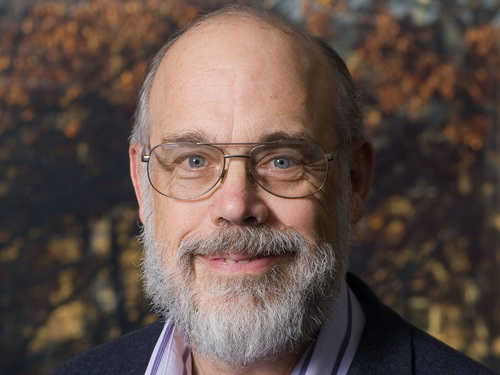
David Schwartz Retires – But Not from Journal
Congratulations to David Schwartz, Frederick W. & Vi Miller Professor of Law and Vilas Distinguished Achievement Professor, upon his retirement this spring after over 25 years of distinguished service at University of Wisconsin Law School. Schwartz will continue to serve as editor-in-chief of the Journal of American Constitutional History, a quarterly publication he founded in 2023. The two-time recipient of the Law School's Classroom Teacher of the Year Award (2004 and 2013) plans to keep researching and writing. A prolific constitutional law scholar, Schwartz has co-authored two casebooks: "Constitutional Law: a Context and Practice Casebook" (with Lori A. Ringhand) and "An Analytical Approach to Evidence: Text, Problems and Cases" (with Allen, Pardo & Stein). He also published the book "The Spirit of The Constitution: John Marshall and the 200-Year Odyssey of McCulloch v. Maryland" in 2019, and his current project, "The Myth of Enumeration: Federal Power and the Failure of Originalism" (with Andrew Coan) is forthcoming with Oxford University Press.
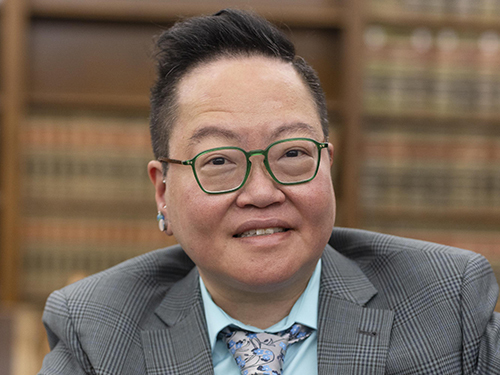
Mark Sidel on 'Compliance as Resistance'
Mark Sidel recently published "Mark Sidel recently published "Compliance as Resistance," on how regulatory compliance can aid civil society and nonprofit resistance to the state, in the Stanford Social Innovation Review. Sidel argues that while increasing government regulations and compliance requirements can burden nonprofit and philanthropic organizations, compliance can also serve as a powerful form of resistance. Rather than viewing regulations solely as obstacles, organizations can use legal compliance to secure legitimacy, protect their ability to operate and create space to advocate for social change. Compliant organizations are often better positioned to challenge government actions, as demonstrated by cases such as Greenpeace India successfully contesting restrictions on foreign funding. Compliance also encourages nonprofits to strengthen internal capacities in areas like governance, accounting and legal oversight, making them more resilient and effective. Additionally, the growth of specialized compliance professionals — lawyers, accountants and advisors — helps civil society organizations navigate complex regulations and maintain a degree of autonomy.
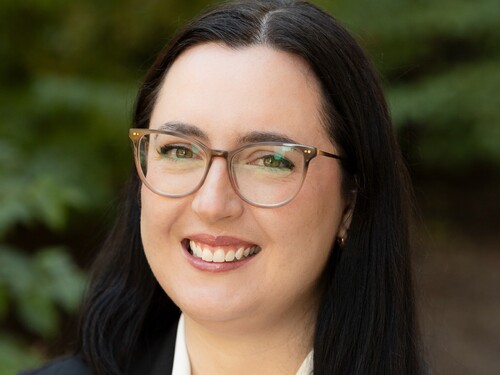
Alta Charo Joins Board Exploring Design, Engineering of Biological Systems
Alta Charo, emerita professor of law and bioethics, was appointed to the board of a new program at the National Academy of Sciences, Engineering and Medicine. The Life Sciences and Biotechnology Program Area explores research from the molecular to the ecosystem level, emphasizing the design and engineering of biological systems. Their work focuses on the convergence of life sciences with engineering, computing and materials science to drive innovation in public health, agriculture and beyond. The program convenes leading experts in the biological, environmental and health sciences to provide independent advice and advance cross-sector understanding of life sciences and their applications. Their work spans issues in biomedical research, biotechnology, agriculture, ecology and the responsible use of animals in research and conservation.