The Thomas E. Fairchild Lectureship was established in 1988 at University of Wisconsin Law School as a tribute to Judge Fairchild. Initiated by his former law clerks, the lectureship brings a distinguished member of the legal profession — from the bench, bar or academia — to speak at UW Law School on a topic of importance to the profession. Many distinguished guests have served as Fairchild lecturers, including Supreme Court Justices John Paul Stevens and Sandra Day O'Connor.
Judge Fairchild Biography
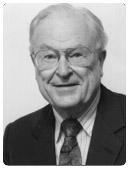
Judge Thomas E. Fairchild, a 1937 UW Law School graduate, was Wisconsin Attorney General, U.S. Attorney for the Western District of Wisconsin, circuit judge, justice of the Wisconsin Supreme Court, and then later chief judge and ultimately senior circuit judge on the U.S. Court of Appeals for the Seventh Circuit until his death on February 12, 2007.
For 50 years, Judge Fairchild demonstrated both a scholarly regard for those principles of law that generations have molded into the American definition of justice and equality and a remarkable sensitivity to the ever-changing human conditions that make the search for justice and equality an ongoing one.
2025-2026 Lecture
"The Future of DEI: Reform or Retreat"
Thursday, Jan. 29, 2026
4 p.m. Central Time
Law Building, Room 2260
About Associate Justice Goodwin H. Liu
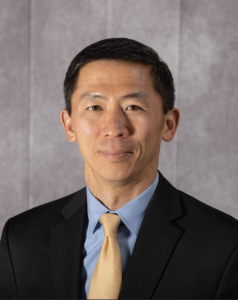
Goodwin Liu is an Associate Justice of the California Supreme Court. Nominated by Governor Jerry Brown, Justice Liu was sworn into office in 2011 and retained by the electorate in 2014 and 2022. Before joining the state’s highest court, Justice Liu was Professor of Law and Associate Dean at the UC Berkeley School of Law. His primary areas of expertise are constitutional law, education law and policy, and diversity in the legal profession.
Justice Liu continues to teach constitutional law as a visiting professor at Harvard, Columbia, and Stanford law schools. He is an elected member and Chair of the Board of Directors of the American Academy of Arts & Sciences. He is also an elected member of the American Philosophical Society, the American Academy of Political and Social Science, and the American Law Institute, serving on its governing Council.
Justice Liu also serves on the Board of Directors of the James Irvine Foundation and the Spencer Foundation, and previously served as President of the Yale University Council and as a member of the Board of Trustees of Stanford University, the National Academy of Sciences Committee on Science, Technology, and Law, the Board of Directors of the National Women’s Law Center, and the California Commission on Access to Justice.
The son of Taiwanese immigrants, Justice Liu grew up in Sacramento and attended public schools. He earned a bachelor’s degree from Stanford, a master’s degree from Oxford University on a Rhodes Scholarship, and a law degree from Yale. He clerked for Judge David Tatel on the U.S. Court of Appeals for the D.C. Circuit and for Justice Ruth Bader Ginsburg on the U.S. Supreme Court. He has also worked in the litigation practice of O’Melveny & Myers, served as Special Assistant to the Deputy Secretary of the U.S. Department of Education, and helped launch the AmeriCorps national service program at the Corporation for National Service.
Support the Thomas E. Fairchild Lecture
You can support Judge Fairchild's legacy by making a gift to the Thomas E. Fairchild Lecture fund today.
Previous Lectures
2024-2025 Fairchild Lecture
"Reflections of an Appellate Lawyer Turned Trial Judge"
About Hon. Robert M. Dow, Jr.

Robert M. Dow, Jr. has served as a United States District Judge for the Northern District of Illinois since December 2007. Effective December 5, 2022, he assumed new duties as Counselor to Chief Justice John G. Roberts, Jr. In this capacity, he serves as the Supreme Court’s chief operating officer and assists the Chief Justice in his administrative responsibilities as head of the federal judiciary. These include the Chief Justice’s roles as Chair of the Judicial Conference of the United States, Chair of the board of the Federal Judicial Center, and Chancellor of the Smithsonian Institution.
From 2013 to 2022, Judge Dow served on the Judicial Conference’s Advisory Committee on Civil Rules. He chaired the committee’s Rule 23 and MDL Subcommittees and served as Chair of the full committee from 2020 to 2022. Judge Dow was a member of the Advisory Committee on Appellate Rules from 2010 to 2013. He has sat by designation on the United States Courts of Appeals for the Sixth and Seventh Circuits and is a member of the American Law Institute. He teaches complex litigation as an Adjunct Professor at Northwestern University Law School.
Prior to his judicial service, Dow was a partner at Mayer Brown LLP, where he was a member of the Firm’s Appellate and Supreme Court and Telecommunications practice groups. Judge Dow received a B.A. (1987) in History and Political Science from Yale University, where he was elected to Phi Beta Kappa. He earned Masters (1990) and Doctorate (1997) degrees in International Relations from the University of Oxford, which he attended on a Rhodes Scholarship, and a J.D. (1993) from Harvard Law School. Immediately after law school, he clerked for Judge Joel M. Flaum of the United States Court of Appeals for the Seventh Circuit.
View a Complete List of Fairchild Lectures
| 2023 | U.S. Solicitor General Elizabeth B. Prelogar, "A Conversation with U.S. Solicitor General Elizabeth B. Prelogar" |
|---|---|
| 2022 | Judge Nancy Gertner, "The Future of the U.S. Supreme Court" |
| 2021 | David Maraniss, "The McCarthy Era and its Echoes: A Story of Family, Journalism and the Search for Truth" |
| 2019 | Professor Geoffrey R. Stone, "The Warren Court: A Fifty Year Retrospective" |
| 2018 | Judge Robert Katzmann, "Civic Education and the Federal Courts" |
| 2017 | Judge Lynn Adelman, "The Erosion of Civil Rights and What to Do About It" |
| 2016 | William C. Hubbard, "Our Justice System at an Inflection Point" |
| 2015 | R. Nils Olsen, Jr., "All in the Family: A Legacy of Public Service and Engagement—Edward and Thomas Fairchild” |
| 2014 | Collins T. Fitzpatrick, " Protecting the Fourth Amendment So We Do Not Sacrifice Freedom for Security" |
| 2013 | Judge William J. Bauer, "The War on Drugs" |
| 2012 | Professor Michael J. Zimmer, "Inequality, Individualized Risk and Insecurity" |
| 2011 | Judge William K. Sessions III, "Federal Sentencing Policy: A Path For The Future" |
| 2010 | John Skilton, "Abraham Lincoln, A Lawyer for the Ages" |
| 2009 | Scott Turow, "It's Only Words: Thoughts of a Lawyer and a Novelist" |
| 2008 | U.S. Attorney Patrick J. Fitzgerald, "Thoughts On How the Legal System Treats Jurors" |
| 2007 | Judge Diane Wood, "Snapshots from the Seventh Circuit: Continuity and Change, 1966 to 2007” |
| 2006 | Judge Joan Humphrey Lefkow, "Thomas E. Fairchild: A Judge's Legacy" |
| 2005 | Sen. Russ Feingold, "Upholding an Oath to the Constitution: A Legislator's Responsibilities" |
| 2004 | Michael Traynor, "Citizenship in a Time of Repression" |
| 2003 | Judge Reena Raggi, "The Role of District Courts" |
| 2002 | Judge Patrick Lucey, Sen. Gaylord Nelson, Ellen Proxmire, and Alexander Shashko, "Revitalization of the Democratic Party of Wisconsin in the Mid-20th Century" |
| 2001 | Professor Elizabeth Warren, "The Market for Data: The Changing Role of Social Sciences in Shaping the Law" |
| 2000 | Stephen B. Bright, "Will the Death Penalty Remain Alive in the Twenty-First Century?" |
| 1999 | Professor Marc Galanter, "Old and in the Way: The Demographic Transformation of the Legal Profession and Its Implications for the Delivery of Legal Services" |
| 1998 | Judge Lawrence Walsh, "The Future of the Independent Counsel Statute" |
| 1997 | Sol M. Linowitz, "Moment of Truth for the Legal Profession" |
| 1996 | John P. Frank, "The Shelf Life of Justice Hugo L. Black" |
| 1995 | Justice Sandra Day O'Connor, "The Life of the Law: Principles of Logic and Experience from the United States" |
| 1994 | Chief Justice Shirley S. Abrahamson, “Refreshing Institutional Memories: Wisconsin and the American Law Institute" |
| 1993 | Judge Mary Schroeder, "Appellate Justice: Fairness or Formulas" |
| 1991 | Judge Harry T. Edwards, "The Judicial Function and the Elusive Goal of Principled Decision Making" |
| 1990 | Judge Kenneth W. Starr: ”The Court of Appeals and the Future of the Federal Judiciary" |
| 1989 | David S. Ruder, "The Development of Legal Doctrine Through Amicus Participation: The SEC Experience" |
| 1988 | Justice John Paul Stevens, "A Judge's Use of History" |
| 1989 | David S. Ruder, "The Development of Legal Doctrine Through Amicus Participation: The SEC Experience" |
Digital Repository
Visit the UW Law School Digital Repository for more about past Fairchild Lectures »
